Alair Gomes
biografiaUntitled
Photograph
15.5 x 21 cm
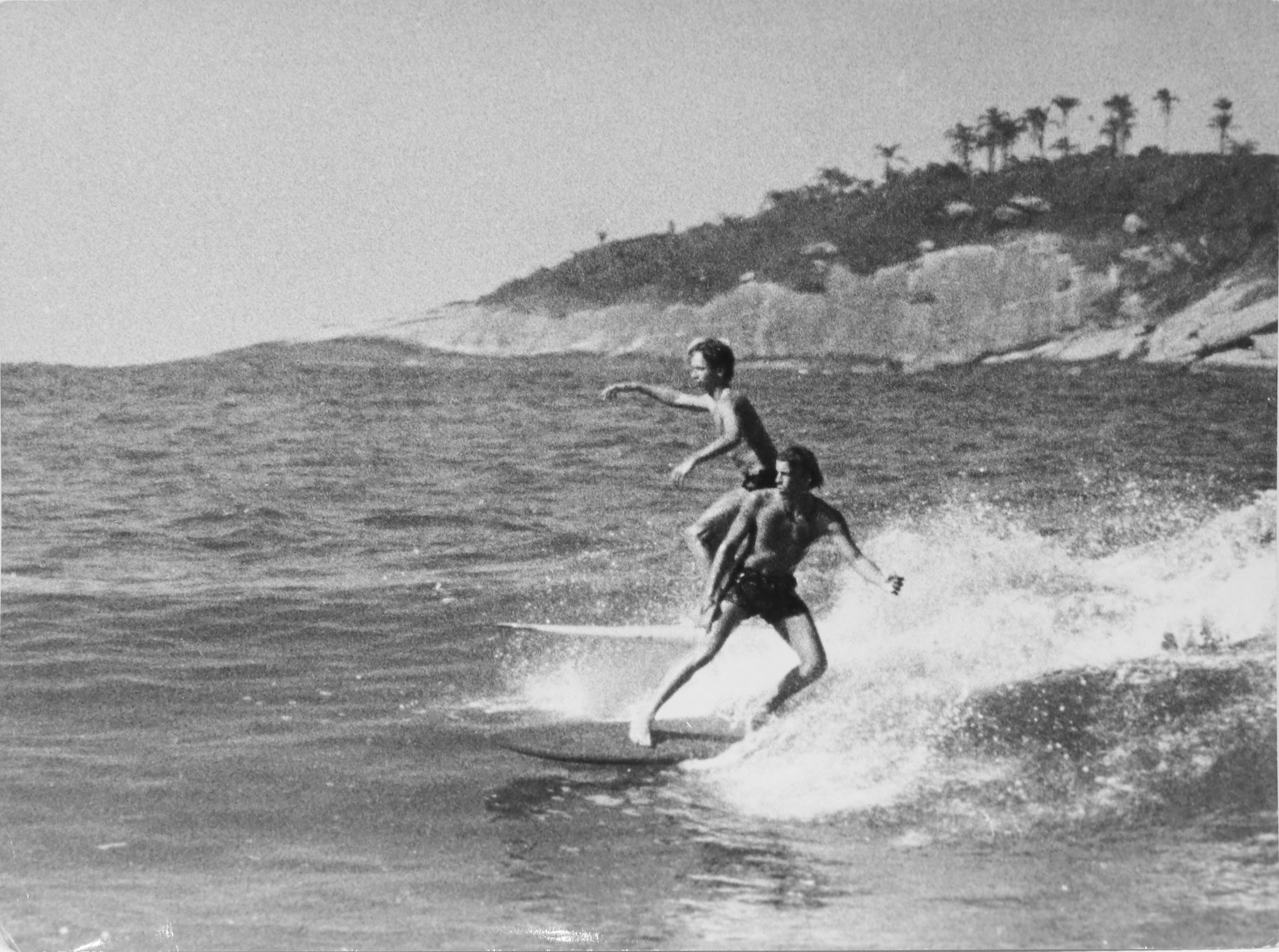
Alair de Oliveira Gomes (Valença, Rio de Janeiro, 1921 – Rio de Janeiro, Rio de Janeiro, 1992). Photographer, philosopher, professor, and art critic.
In 1944, he graduated with a degree in civil engineering from the National School of Engineering at the University of Brazil (now the Federal University of Rio de Janeiro, UFRJ). Two years later, he co-founded the literary magazine “Magog” alongside poet Marcos Konder Reis (1922–2001) and others. In 1948, he left engineering to study physics, mathematics, philosophy, and biology. He became a professor at the Institute of Biophysics of Rio de Janeiro in 1958. Awarded a Guggenheim Fellowship in 1962, he spent approximately a year conducting research at Yale University in the United States.
From the late 1960s onward, he dedicated himself consistently to photography and art criticism. The majority of his images consist of male nude sequences and photographs of young men taken from the window of his apartment overlooking Ipanema Beach in Rio de Janeiro, in addition to documentations of the Rio Carnival. In the same city, from 1977 to 1979, he worked as photography coordinator at the School of Visual Arts of Parque Lage (EAV/Parque Lage), where he played an important role as an educator in fine arts and philosophy. Between 1976 and 1984, he participated in group exhibitions in New York, Paris, Rio de Janeiro, and Toronto. In 2001, the Fondation Cartier pour l’art contemporain in Paris presented a retrospective of his work featuring images from the collection of the National Library of Brazil in Rio de Janeiro.
Critical Commentary:
An engineer by training, as well as a philosopher, writer, scholar, and art critic, Alair Gomes dedicated the last 26 years of his life to photography, producing a body of approximately 170,000 negatives centered on the beauty of the male body. Confessional and narrative in tone, the meaning of his poetics is primarily constructed through the process of editing and organizing this material. His images are not autonomous compositions; rather, they form sequences arranged around notions of rhythm and formal relationships established between individual photographs.
Source: Itaú Cultural*