Carlos Vergara
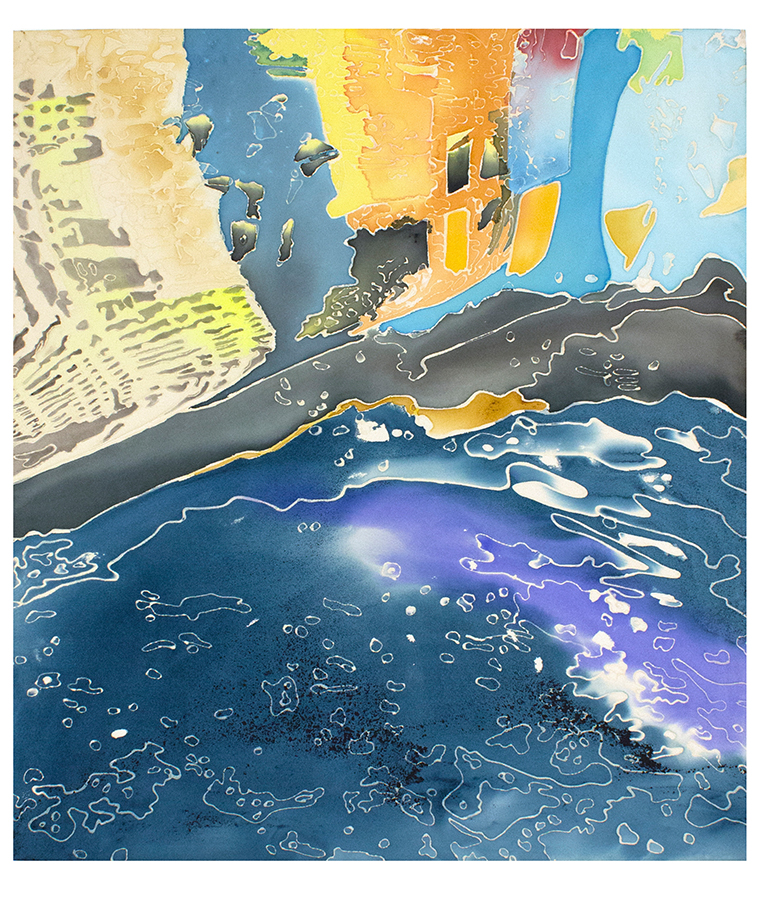
biografiaUntitled
pigments and painting on canvas
195 x 174 cm
Carlos Augusto Caminha Vergara dos Santos (b. Santa Maria, Rio Grande do Sul, 1941) is a printmaker, photographer, and painter. In the 1950s, he moved to Rio de Janeiro where, alongside working as a laboratory analyst, he dedicated himself to jewelry craftsmanship, exhibiting his pieces at the 7th São Paulo International Biennial in 1963. That same year, he turned to drawing and painting, undertaking studies with Iberê Camargo (1914–1994). He participated in the landmark exhibitions Opinião 65 and Opinião 66 at the Museum of Modern Art of Rio de Janeiro (MAM Rio). In 1967, he was one of the organizers of Nova Objetividade Brasileira [New Brazilian Objectivity], an exhibition that sought to survey the Brazilian avant-garde. He also worked as a set and costume designer for theatrical productions. During this period, his figurative paintings revealed strong affinities with expressionism and pop art. Throughout the 1970s, he utilized photography and Super-8 films to engage in reflections on reality, while Brazilian carnival also emerged as a central focus of his research. He further collaborated with architects, creating panels for various buildings using materials and techniques derived from popular craftsmanship. In 1972, he published the drawing portfolio Texto em Branco [Blank Text] with Editora Nova Fronteira. During the 1980s, he returned to painting, producing geometric abstract canvases that primarily explored lozenge grids defining chromatic fields. Since the late 1980s, he has employed natural pigments and minerals to create the foundation for works across diverse surfaces. In 1997, he created the Monotipias do Pantanal [Pantanal Monotypes] series, in which he engaged in direct contact with the natural environment, transferring textures from rocks and leaves onto the canvas, among other experimental procedures.
Source: Itaú Cultural